[:en]Homophobia and Transphobia in Sport – Results of the first EU-wide survey [:it]Omofobia e Transfobia nello sport – Risultati della prima ricerca a livello europeo[:de]Homophobie und Transphobie im Sport – Ergebnisse der ersten EU-weiten Befragung[:hu]Homofóbia és Transzfóbia a sport világában[:]
[:en]
Homophobia and Transphobia in Sport – Results of the first EU-wide survey based on direct experiences of LGBTI people published today
More than 5,500 lesbian, gay, bisexual, transgender and intersex (LGBTI) people from all 28 EU countries completed the online survey created by the Institute of Sociology and Gender Studies of the German Sport University Cologne within the framework of the Erasmus + Outsport project. The age of the participants is between 16 and 78 years and 27 years on average.
The complete report – which can now be accessed on our website, out-sport.eu – contains the aggregated data results at EU level and highlights the differences with regard to sexual orientation and gender identity and between the five project countries Italy, Germany, Scotland, Hungary and Austria, offering a rich and wide perspective of anti-LGBTI attitudes in sport and in different sport disciplines and environments, as lived and perceived by LGBTI people.
“We are proud of this work and we are sure that the results are fundamental for policies to combat anti-LGBTI attitudes in sport both at European and national level” says Rosario Coco, Outsport coordinator.
Some of the key results of the study are:
-
Almost 90% consider homophobia and particularly transphobia in sport a current problem.
-
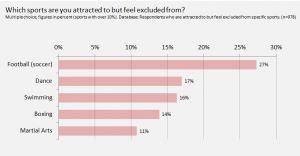
20% refrain from participating in a sport of interest due to their sexual orientation and/or gender identity. This is most frequently the case for trans people (54%) and refers predominantly to football/soccer, dancing, swimming, and boxing.
-
One third of respondents who are active in sports have not reveled their sexual orientation or gender identity respectively to anybody in the sporting environment. This percentage is higher in Italy (41%) and Hungary (45%).
-
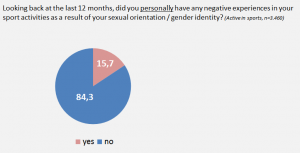
16% of respondents who are currently active in any sports have had at least one negative personal experience in the last 12 months that was related to their sexual orientation or gender identity. The share is higher among trans people – especially among trans women (46%).
-
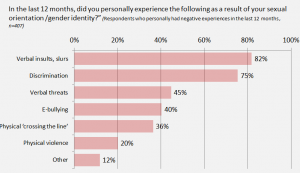
Of those with negative experiences, verbal insults (82%) and structural discrimination (i.e. unequal opportunities) (75%) are the most common forms of homo-/transphobic incidents that were indicated. Verbal threats (44%), e-bullying (40%), physically “crossing the line” (i.e. being shoved and/or pushed) (36%) and physical violence (20%) are also common experiences.
-
More than a third of respondents do not know an organisation or individual to contact in instances of being discriminated against in a sports context.
-
The three actions that are most often supposed by respondents to be helpful to tackle homo-/transphobic discrimination in the field of sport: (a) famous sports stars coming out, (b) high profile anti-homophobia/transphobia campaigns and (c) diversity trainings.
Based on these survey findings, umbrella sport organisations and sport federations are currently being interviewed about their strategies in tackling homo-/transphobic discrimination in the field of sport. The results of this substudy will be published on the 8th of November 2019 at the final Outsport Conference in Budapest.
Press Office
Andrea Maccarrone
andymaccarrone@gmail.com
+39 3497355715
[:it]
Omofobia e transfobia nello sport
I risultati della prima ricerca a livello europeo sull’esperienza delle persone Lgbti pubblicati oggi. In Italia il 41% delle persone LGBTI che praticano sport non fa coming out.
Oltre 5500 persone lesbiche, gay, bisessuali, transgender e intersessuali(Lgbti) residenti nei 28 paesi dell’Unione Europea hanno completato il questionario online proposto dall’ Institute of Sociology and Gender Studies della German Sport University di Colonia nell’ambito del progetto Erasmus+ Outsport. L’età dei partecipanti varia dai 16 ai 78 anni con una media di 27 anni.
Il report integrale, con i risultati complessivi a livello di Unione Europea ed evidenziati separatamente per i 5 paesi (Italia, Germania, Austria, Scozia, Ungheria) coinvolti nel progetto, è da oggi disponibile sul sito di Outsport al seguente link http://www.out-sport.eu/research e offre una panoramica ricca e articolata del fenomeno dell’omo-transfobia nello sport e per le diverse discipline e contesti sportivi, come vissuto e percepito dalle persone Lgbti.
“Siamo orgogliosi di questo lavoro e confidiamo che i dati contenuti nel nostro report siano fondamentali per le politiche di contrasto alle discriminazioni omo-transfobiche nello sport sia a livello europeo che dei singoli Paesi” dichiara Rosario Coco, coordinatore di Outsport.
I principali risultati sono:
- Il 90% delle e dei partecipanti percepisce l’omofobia come un problema nello sport. La percentuale è ancora più alta per la transfobia.
- Quasi il 20% di tutte/i le e i partecipanti hanno rinunciato alla pratica di uno sport a causa del proprio orientamento sessuale o identità di genere. Questa percentuale sale al 54% per le persone trans e si riferisce in proporzione maggiore al calcio, alla danza, al nuoto e alla box.
- Circa un terzo di chi pratica sport non ha rivelato il proprio orientamento sessuale a nessuno in ambito sportivo. Questa percentuale raggiunge il 41% in Italia e il 45% in Ungheria.
- Il16% delle e dei partecipanti che sono attive/i in qualsiasi sport hanno avuto almeno una personale esperienza negativa legata al proprio orientamento sessuale o identità di genere negli ultimi 12 mesi. La percentuale sale però al 30% per gli uomini trans, al 36% per le persone non binarie e al 46% per le donne trans.
- Nel 49% dei casi chi agisce una discriminazione sono compagne/i di squadra. In Italia si sale al 60%.
- Tra coloro che hanno segnalato esperienze negative l’82% hanno ricevuto insulti verbali e il 75% una discriminazione strutturale. Ma sono comuni anche le minacce (44%), il bullismo (40%), superamento della linea fisica, come spinte o contatti indesiderati (36%) e persino la violenza fisica (20%).
- Oltre un terzo delle e dei rispondenti non conosce alcuna organizzazione o individuo a cui rivolgersi in caso di esperienze negative.
- Le tre azioni che vengono indicate come possibilmente più utili nel contrastare l’omo-transfobia nello sport sono: a) il coming out di sportivi famosi, b) campagne di lotta all’omo-transfobia di alto profilo, c) formazione sulla diversity
Il rapporto completo oltre ai dati aggregati, evidenzia le differenze riguardo l’orientamento sessuale e l’identità di genere e tra i 5 Paesi del progetto (Italia, Austria, Germania, Scozia, Ungheria).
Sulla base di questa indagine sono stati intervistati i responsabili di alcune organizzazioni sportive ombrello e federazioni sportive sulle loro strategie di contrasto all’omo-transfobia e i risultati di quest’ultima indagine saranno pubblicati il prossimo 8 novembre in occasione della final conference di Outsport a Budapest.
Ufficio Stampa
Andrea Maccarrone
andymaccarrone@gmail.com
+39 3497355715
[:de]
Ergebnisse der ersten EU-weiten Befragung zu den Erfahrungen von LGBTI*-Personen im Sport wurden heute veröffentlicht
Über 5.500 Lesben, Schwule, Bisexuelle, Transgender und/oder intersexuelle Personen (LGBTI*) aus allen 28 EU-Ländern haben an der Online-Befragung des Instituts für Soziologie und Genderforschung der Deutschen Sporthochschule Köln im Rahmen des Erasmus+ Projekts OUTSPORT teilgenommen. Das Alter der Teilnehmer*innen liegt zwischen 16 und 78 Jahren und im Schnitt bei 27 Jahren.
Der vollständige Bericht –der auf unserer Website out-sport.eu abgerufen werden kann –enthält ausgewählte Ergebnisse auf EU-Ebene und geht auf Unterschiede in Bezug auf die sexuelle Orientierung und Geschlechtsidentität sowie zwischen den fünf Projektländern Italien, Deutschland, Schottland, Ungarn und Österreich ein. Der Report bietet einen Überblick über die vielfältigen Erfahrungen von LGBTI*-Personen in verschiedenen Sportdisziplinen und –umgebungen.
“Wir sind stolz auf diese Arbeit und wir sind sicher, dass die Ergebnisse von grundlegender Bedeutung für die Politik zur Bekämpfung von Anti-LGBTI*-Einstellungen im Sport auf europäischer sowie auf nationaler Ebene sind”, sagt Rosario Coco, Koordinator von Outsport.
Einige der wichtigsten Ergebnisse der Studie sind:
- Fast 90% betrachten Homophobie und insbesondere Transphobie im Sport als aktuelles Problem.
- 20% verzichten aufgrund ihrer sexuellen Orientierung und/ oder Geschlechtsidentität auf die Teilnahme an einem Sport von Interesse. Dies ist am häufigsten bei Trans Personen der Fall (54%) und bezieht sich hauptsächlich auf Fußball, Tanzen, Schwimmen und Boxen.
- Ungefähr ein Drittel der Befragten, die im Sport aktiv sind, haben ihre sexuelle Orientierung oder Geschlechtsidentität gegenüber niemandem in ihrem Sportumfeld offengelegt. Dieser Prozentsatz ist in Italien (41%) und Ungarn (45%) höher.
- 16% der Befragten, die derzeit sportlich aktiv sind, haben in den letzten 12 Monaten mindestens eine negative persönliche Erfahrung gemacht, die mit ihrer sexuellen Orientierung oder Geschlechtsidentität zusammenhängt. Bei Trans Personen ist dieser Anteil höher – insbesondere bei Transfrauen (46%).
- Von denjenigen mit negativen Erfahrungen sind verbale Beleidigungen (82%) und strukturelle Diskriminierungen (z.B. ungleiche Chancen) (75%) die häufigsten Formen homo- / transphober Vorfälle. Verbale Drohungen (44%), E-Mobbing (40%), körperliche Grenzüberschreitungen (z.B. Schubsen) (36%) und körperliche Gewalt (20%) sind ebenfalls häufige Erfahrungen.
- Mehr als ein Drittel der Befragten kennt keine Organisation oder Person, an die sie sich wenden können, wenn sie im sportlichen Kontext diskriminiert werden.
- Die drei Maßnahmen, die aus Sicht der Befragten am hilfreichsten bei der Bekämpfung von homo- / transphober Diskriminierung im Sport sind, sind (a) das ‚Coming Out‘ von bekannte Sportstars, (b) Anspruchsvolle Anti-Homophobie/Transphobie Kampagnen und (c) Diversity-Schulungen.
Basierend auf den Ergebnissen dieser Studie werden derzeit Sportverbände und Dachorganisationen zu ihren Strategien zur Bekämpfung von homo-/ transphober Diskriminierung im Sport befragt. Die Ergebnisse dieser Teilstudie werden am 8. November 2019 auf der abschließenden Outsport-Konferenz in Budapest veröffentlicht.[:hu]
Homofóbia és Transzfóbia a sport világában
Az egész EU-ra kiterjedö felmérés, ami az LMBTI közösség tagjainak közvetlen tapasztalatain alapul – a felmérés eredményei mától nyilvánosak
Több, mint 5500 leszbikus, meleg, biszexuális, transznem? és interszexuális(LMBTI) személy az EU mind a 28 tagállamából töltötte ki azt az online kérd?ívet, amit a Kölni Német Sportegyetem Szociológiai és Gender Tanulmányi intézete készített az Erasmus+ Outsport -projekt keretében. A kérd?ívet kitölt?k kora 16 és 78 év között mozgott, az átlagéletkor 27.
A felmérésr?l szóló teljes beszámoló elérhet? a honlapunkon http://www.out-sport.eu/research. A beszámoló tartalmazza az összesített adatokat EU-szinten, és rámutat azokra a különbségekre, amik az öt projektben részt vev? országban (Olaszország, Németország, Skócia, Magyarország és Ausztria) tapasztalhatóak a szexuális orientáció és a nemi identitás területén. A beszámoló bemutatja azokat az LMBTI-ellenes attitüdöket, amiket az egyes sportágakban és azok környezetében az LMBTI közösség tagjai megélnek.
“Büszkék vagyunk erre a munkára, és biztosak vagyunk benne, hogy az eredmények alapot tudnak adni a sport világában tapasztalható LMBTI-ellenes attitüdök legy?zésében európai és állami szinten” – mondta Rosario Coco, Outsport-koordinátor.
Néhány föbb eredmény a tanulmányb?l:
-
A válaszadók majdnem 90%-a tartja aktuális problémának a homofóbiát és f?leg a transzfóbiát a sport világában.
-
A válaszadók 20%-a inkább nem vesz részt kedvelt sportjában a szexuális oriendtációjuk vagy a nemi identitásuk miatt. Ez f?leg a transznemúeket érinti (54%) és f?leg a labdarugásban, táncban, úszásban és ökölvívásban.
- Az aktívan sportoló válaszadók egyharmada nem fedte fel szexuális orientációját vagy nemi identitását a sportolói környezetében. Ez az arány magasabb Olaszországban (41%) és Magyarországon (45%)
-
Az aktivan sportoló válaszadól 16%-ának volt legalább egy, a szexuális orientációjához vagy nemi identitásához köthet? negatív tapasztalata az utóbbi 12 hónapban. Ez az arány magasabb a transznem?ek között – f?leg a transz n?k között (46%).
-
A negatív élmények közül a szóbeli zaklatás (82%) és a strukturális diszkrimináció (pl. egyenl?tlen lehet?ségek) (75%) a leggyakoribb kimutatott homo- és transzfób esetek. Szóbeli fenyegetések (44%), internetes zaklatás (40%), fizikai “határátlépések” (pl. lökdösés) (36%) és a testi er?szak (20%) szintén gyakori tapasztalatok.
-
A válaszadók több, mint harmada nem simer olyan szervezetet vagy személyt, akit?l segítséget tudnának kérni, ha a sport világában diszkrimáció éri ?ket.
-
The three actions that are most often supposed by respondents to be helpful to tackle homo-/transphobic discrimination in the field of sport: (a) famous sports stars coming out, (b) high profile anti-homophobia/transphobia campaigns and (c) diversity trainings.
-
A válaszadók az alábbi három dolgot nevezték meg leginkább, amik szerintük segítene csökkenteni a sport világában a homo- és transzfób megkülönböztetést: (a) a hires sportolók el?bujása (coming out) (b) magas szint? homofóbia-ellenes kampányok (c) képzések a sokszín?ségr?l.
A felmérés eredményei alapján most országos sportszövetségeket és erny?szervezeteket kérdezünk meg, hogy a szervezetek milyen stratégiákat használnal a sport területén el?forduló homo- és transzfóbia leküzdésére. Az eredményeket a Outsport-projekt zárókonferencián hozzuk nyilvánosságra. A konferenciát 2019. November 8. tartjuk Budapesten.
Press Office
Andrea Maccarrone
andymaccarrone@gmail.com
+39 3497355715
[:]