[:en]Outsport Training of Trainers: outcomes and future[:it]Outsport Training of Trainers: risultati e prospettive[:de]Outsport Training für Trainer: Ergebnisse und Ausblick[:hu]Outsport Training of Trainers: outcomes and future[:]
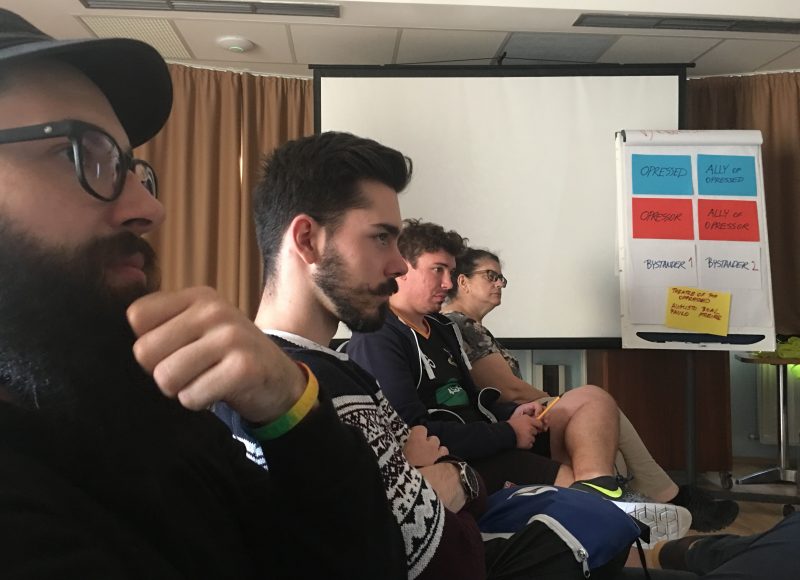
[:en]The Outsport trainer team was in Budapest from 5th to 9th October for the International Training of Trainers, a specific training course based on non formal education through sport with a specific focus on sexual orientation and gender identity issues.
 12 participants have been selected within Outsport partners: from Aics (Italy), Leap (Scotland), Vidc (Austria) and from Frigo (Hungary).
The main goal is creating new educational tools for sport operators: from athletes and coaches, up to sport institutions, in order to develop safe sport environments in which every participant can feel fully respected regardless of sexual orientation and gender identity.
This course is a concrete step to make sport itself an educational tool to tackle this kind of discrimination in the society and it aims to develop new national training projects. Exercises and group activities have been carried out in order to make participants in someone else shoes and reflect about facts.
As stated in the project presentation, the approach is to challenge homophobia and sexism in sports as phenomena regarding the whole population: even if they affects directly Lgbti people, such prejudices are strongly grounded on gender stereotypes and play a crucial rule in bullying and other hate crimes.
Finally, this kind of training aims at showing that a real inclusion plays a decisive role in team building and sport results achievement.
[:it]Il gruppo di formatori di Outsport è stato a Buapest dal 5 al 9 ottobre scorsi per la Formazione internazionale dei formatori, uno specifico corso di training basato sull’educazione non formale attraverso lo sport, e un focus particolare sulle questioni legate all’orientamento sessuale e all’identità di genere.
12 partecipanti sono stati selezionati dai diversi partner di Outsport: da Aics (Italia), Leap (Scozia), Vidc Austria), Frigo Ungheria).
L’obiettivo principale era creare nuovi strumenti educativi per chi opera in ambito sportivo: dagli atleti e agli allenatori, fino alle istituzioni sportive, per sviluppare ambienti sportivi sicuri in cui ognuno possa sentirsi pienamente rispettato a prescindere dall’orientamento sessuale e dall’identità di genere.
Questo corso è un concreto passo avanti per fare dello sport stesso uno strumento educativo per contrastare questo genere ti discriminazioni nella società e punta a sviluppare nuovi progetti a livello nazionale. Esercizi e attività di gruppo sono state condotte per spingere i partecipanti a a immedesimarsi nella condizione di qualcun altro e riflettere sui fatti.
Come previsto nella presentazione del progetto, l’apporoccio è contrastare l’omofobia e il sessismo nello sport come fenomeni che riguardano l’intera popolazione: anche se colpiscono direttamente solo le persone Lgbti, questi pregiudizi sono fortemente radicati negli stereotipi di genere e giocano un ruolo cruciale nel bullismo e nei crimini di odio.
Infine questo tipo di formazione punta a mostrare che una vera inclusione gioca un ruolo cruciale bella costruzione del gruppo, del senso di squadra e del raggiungimento dei risultati sportivi.
[:de]Das Outsport-Trainer-Team war vom 5. bis 9. Oktober in Budapest für die Internationale Ausbildung von Ausbildern, einer spezifische Ausbildung im Rahmen des Outsport-Projekts, die auf nicht-formaler Bildung durch Sport mit einem spezifischen Fokus auf sexuelle Orientierung und Geschlechtsidentitätsfragen basiert.
12 Teilnehmer wurden durch die Outsport-PartnerOrganisationen ausgewählt: von AICS (Italien), Leap (Schottland), Vidc (Österreich) und Frigo (Ungarn).
Das Hauptziel ist die Schaffung neuer Bildungsinstrumente für Sportbetreiber: von Sportlern und Trainern bis hin zu Sportorganisationen, um sichere Sportumgebungen zu entwickeln, in denen sich jeder Teilnehmer unabhängig von sexueller Orientierung und Geschlechtsidentität voll respektiert fühlt.
Dieser Kurs ist ein konkreter Schritt, um den Sport selbst zu einem Bildungsinstrument zu machen, mit dem diese Art von Diskriminierung in der Gesellschaft bekämpft werden kann, und zielt darauf ab, neue nationale Ausbildungsprojekte zu entwickeln. Übungen und Gruppenaktivitäten wurden durchgeführt, um den Teilnehmern in die Persekptive der Betroffenen zu versetzen und über Fakten nachzudenken.
Wie in der Projektpräsentation dargelegt, geht es darum, Homophobie und Sexismus im Sport als Phänomene in Bezug auf die Gesamtbevölkerung zu bekämpfen: Selbst, wenn sie direkt LGBTI-Menschen betreffen, basieren solche Vorurteile meist stark auf Geschlechterstereotypen und spielen eine entscheidende Rolle bei Mobbing und anderen Hass-Verbrechen.
Schließlich soll mit dieser Art von Ausbildung gezeigt werden, dass eine echte Inklusion eine entscheidende Rolle bei der Teambildung und bei der Erzielung von Sportergebnissen spielt.
[:hu]The Outsport trainer team was in Budapest from 5th to 9th October for the International Training of Trainers, a specific training course based on non formal education through sport with a specific focus on sexual orientation and gender identity issues.
12 participants have been selected within Outsport partners: from Aics (Italy), Leap (Scotland), Vidc (Austria) and from Frigo (Hungary).
The main goal is creating new educational tools for sport operators: from athletes and coaches, up to sport institutions, in order to develop safe sport environments in which every participant can feel fully respected regardless of sexual orientation and gender identity.
This course is a concrete step to make sport itself an educational tool to tackle this kind of discrimination in the society and it aims to develop new national training projects. Exercises and group activities have been carried out in order to make participants in someone else shoes and reflect about facts.
As stated in the project presentation, the approach is to challenge homophobia and sexism in sports as phenomena regarding the whole population: even if they affects directly Lgbti people, such prejudices are strongly grounded on gender stereotypes and play a crucial rule in bullying and other hate crimes.
Finally, this kind of training aims at showing that a real inclusion plays a decisive role in team building and sport results achievement.
[:]