IOC and sex testing: what is at stake and why Outsport supports the 17 March statement

In recent months, the debate on sex testing at the International Olympic Committee (IOC) has returned to the centre of international sport governance.
At the core of the discussion is the work of an IOC group on the “protection of the female category”, established in 2025. While no final decision has been announced, reported proposals include stricter eligibility rules and the possible introduction of genetic testing.
This would mark a significant shift. Sex testing was largely abandoned in the early 2000s after being widely recognised as invasive, degrading and scientifically unreliable. Today, there is a real risk of moving backwards.
This would mark a significant shift. Sex testing was largely abandoned in the early 2000s after being widely recognised as invasive, degrading and scientifically unreliable. Today, there is a real risk of moving backwards.
Why this debate is back
The current situation reflects a broader shift across international sport.
In 2021, the IOC adopted a framework based on fairness, inclusion and non-discrimination, moving away from universal rules. However, since then, several federations have taken a different direction.
Among them, World Athletics has introduced increasingly restrictive policies and is now moving towards a more standardised approach. This includes the potential introduction of a one-time genetic test (SRY gene) for athletes competing in the female category — a shift from case-by-case assessment to a form of systematic screening.
This evolution is one of the key drivers behind the renewed focus on IOC sex testing policies.
From the January letter to the March statement
On 22 January 2026, the Sport & Rights Alliance sent a letter to the IOC raising concerns about transparency, consultation and the possible introduction of mandatory testing or blanket exclusion policies.
On 17 March 2026, the same coalition escalated its position with a joint statement, endorsed by over 80 organisations worldwide.
The statement calls on the IOC to:
-
reject reported plans for genetic or universal testing;
-
avoid blanket bans affecting trans and intersex athletes;
-
ensure that any policy respects human rights, dignity and scientific integrity.
The shift is clear: from asking for clarification to calling for a halt.
Why the IOC’s approach to sex testing is not neutral
Sex testing is often presented as a technical solution to ensure fairness. In reality, it raises fundamental concerns.
Historically, these practices have not only affected trans athletes, but also cisgender women and intersex athletes, often based on suspicion or simplified biological criteria.
They raise serious issues related to:
-
privacy and bodily autonomy
-
risk of arbitrary exclusion
-
scientific oversimplification
-
stigma and public scrutiny
For this reason, the debate should not be framed as ideological, but as a matter of governance, proportionality and rights.
From hormone rules to genetic proxies: a shift that does not solve any problem
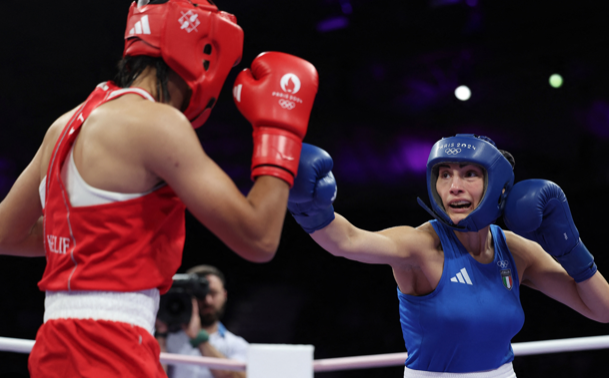
After the cases of Caster Semenya and Imane Khelif, sports bodies are gradually moving away from purely hormone-based regulations towards puberty-related criteria and genetic markers such as the SRY gene.
However, this shift does not resolve the underlying issue — it reframes it.
World Athletics, for instance, has not replaced hormone-based rules with genetics. Instead, it has added SRY testing as an additional layer, while maintaining testosterone regulations for DSD athletes. The result is a system that combines multiple filters rather than addressing their limitations.
This layered approach reflects a deeper problem: the use of proxies.
In this context, a proxy is an indirect indicator — something used to stand in for what cannot be directly measured. Here, the intended target is competitive advantage. Yet SRY does not measure performance, physiology, or functional capacity.
This limitation is also reflected in the broader scientific literature. Recent research published in the British Journal of Sports Medicine (2026) highlights how the relationship between biological markers and athletic performance is complex and context-dependent, with no single variable providing a reliable predictor of competitive advantage.
The risk of relying on simplified biological indicators as regulatory thresholds in sport.
At best, SRY is an imperfect proxy. While some conditions involving the Y chromosome may be associated with higher androgen levels, others are not. For example, androgen insensitivity syndrome — affecting approximately 1 in 20,000 to 50,000 individuals — involves the presence of SRY without any functional androgen effect.
At the same time, hyperandrogenism can also occur in XX women without any Y-linked genetics.
Estimates further show how rare these variations are. Conditions involving XY DSD with elevated androgen levels are estimated to be well below 1 in 10,000 in the general population. More broadly, figures suggesting that around 1 in 5,000 people have differences of sex development refer to a wide and heterogeneous group of conditions — many of which do not involve SRY at all.
This leads to a critical consequence: the system is not identifying advantage — it is managing uncertainty through exclusion.
In sport, proxies are acceptable when they closely reflect performance — as in weight categories or age groups, where the link to competitive outcomes is strong and observable. SRY does not meet this standard. It replaces measurable traits with a genetic marker only loosely connected to athletic advantage, resulting in broad and categorical exclusion.
Ultimately, this raises a question of proportionality. If a rule restricts access to competition, it should be based on a clear, evidence-based link to performance. In the case of SRY, that link is weak — yet the consequences are absolute.
The position of Outsport Office
As Outsport Office – AiCS, we support the 17 March statement because we believe that the potential return of sex testing in IOC policy would be a serious mistake on multiple levels.
1. A governance failure
Decisions of this magnitude require transparency, accountability and meaningful consultation.
2. A human rights concern
Universal testing directly affects privacy, dignity and non-discrimination.
3. A scientific and methodological issue
Reducing eligibility to single biological markers oversimplifies a complex reality.
4. A cultural step backwards
Reintroducing sex testing reinforces harmful patterns of control over women’s bodies.
5. A contradiction with sport’s social role
Outsport’s work is based on research, Education Through Sport and policy implementation. Our experience shows that fairness and rights must be addressed together.
In 2023, the World Health Organization recognised the Outsport Toolkit as a good practice in its guidance on inclusive and health-promoting sport systems. This reinforces a key principle: inclusion, safety and dignity are integral to credible sport.
What we ask from the IOC
We call on the IOC to:
-
reject the return to universal sex testing;
-
avoid blanket exclusion policies;
-
ensure transparency in its decision-making process;
-
remain consistent with its 2021 framework;
-
adopt policies that are evidence-based, proportionate and aligned with human rights.
References
World Athletics (2023–2024), Eligibility Regulations for the Female Category (DSD and transgender athletes)
https://worldathletics.org/about-iaaf/documents/book-of-rules
World Athletics Council (March 2023), Female eligibility and testosterone regulations press release
https://worldathletics.org/news/press-releases/council-meeting-march-2023-female-eligibility
Bermon, S. et al. (2017), Serum androgen levels and their relation to performance in track and field, British Journal of Sports Medicine
https://bjsm.bmj.com/content/51/17/1309
Healy, M. L. et al. (2014), Endocrine profiles in elite athletes with differences of sex development, British Journal of Sports Medicine
https://bjsm.bmj.com/content/48/15/1167
Roberts, T. A. et al. (2026), Biological markers and athletic performance: limits of predictive value, British Journal of Sports Medicine
https://bjsm.bmj.com/content/60/3/198
Hughes, I. A. et al. (2006), Consensus statement on management of intersex disorders, Journal of Clinical Endocrinology & Metabolism
https://academic.oup.com/jcem/article/91/12/4525/2656297
Sax, L. (2002), How common is intersex? A response to Anne Fausto-Sterling, Journal of Sex Research
https://pubmed.ncbi.nlm.nih.gov/12476264/
International Olympic Committee (2021), Framework on Fairness, Inclusion and Non-Discrimination on the Basis of Gender Identity and Sex Variations
https://www.olympics.com/ioc/documents/athletes/ioc-framework-on-fairness-inclusion-and-non-discrimination-on-the-basis-of-gender-identity-and-sex-variations
Sport & Rights Alliance (2026), Letter to the IOC on human rights and eligibility policies
https://sportandrightsalliance.org/olympics-uphold-human-rights-for-all-athletes/
Sport & Rights Alliance (2026), Joint statement: Sex testing harms all women and girls
https://sportandrightsalliance.org/olympics-sex-testing-harms-all-women-and-girls/
World Health Organization (2023), Inclusive, sustainable, welcoming national sports federations: health promoting sports federation implementation guidance
https://www.out-sport.eu/the-world-health-organization-recognizes-the-outsport-method-as-an-educational-sport-practice-for-health/
Reuters (2026), IOC urged to drop reported gender test plans for female athletes
https://www.reuters.com/sports/ioc-urged-drop-reported-gender-test-plans-female-athletes-2026-03-17/
Reuters (2024), No doubt boxers in gender dispute are women, IOC says
https://www.reuters.com/sports/olympics/no-doubt-boxers-gender-dispute-are-women-iocs-bach-says-2024-08-03/
Reuters (2023), Caster Semenya wins appeal over human rights violations
https://www.reuters.com/sports/athletics/semenya-wins-appeal-over-human-rights-violations-2023-07-11/