Federation of Gay Games Signs the Charter for Gender Diversity in Sport at Gay Games XII
Valencia hosts the first Mediterranean Gay Games
The Federation of Gay Games (FGG) has signed the Charter for Gender Diversity in Sport, strengthening its commitment to the full participation of transgender, intersex and non-binary people in sporting environments.
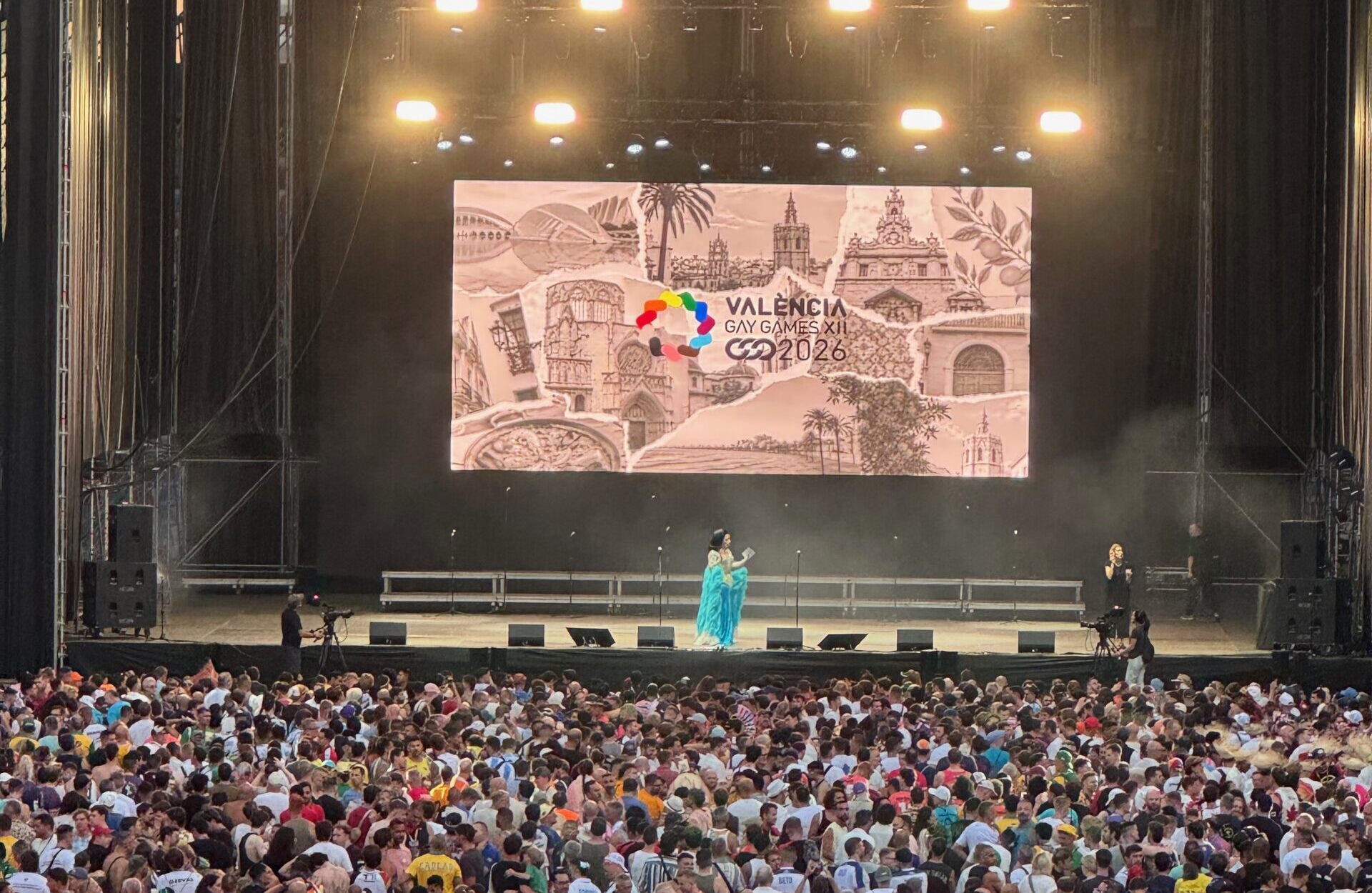
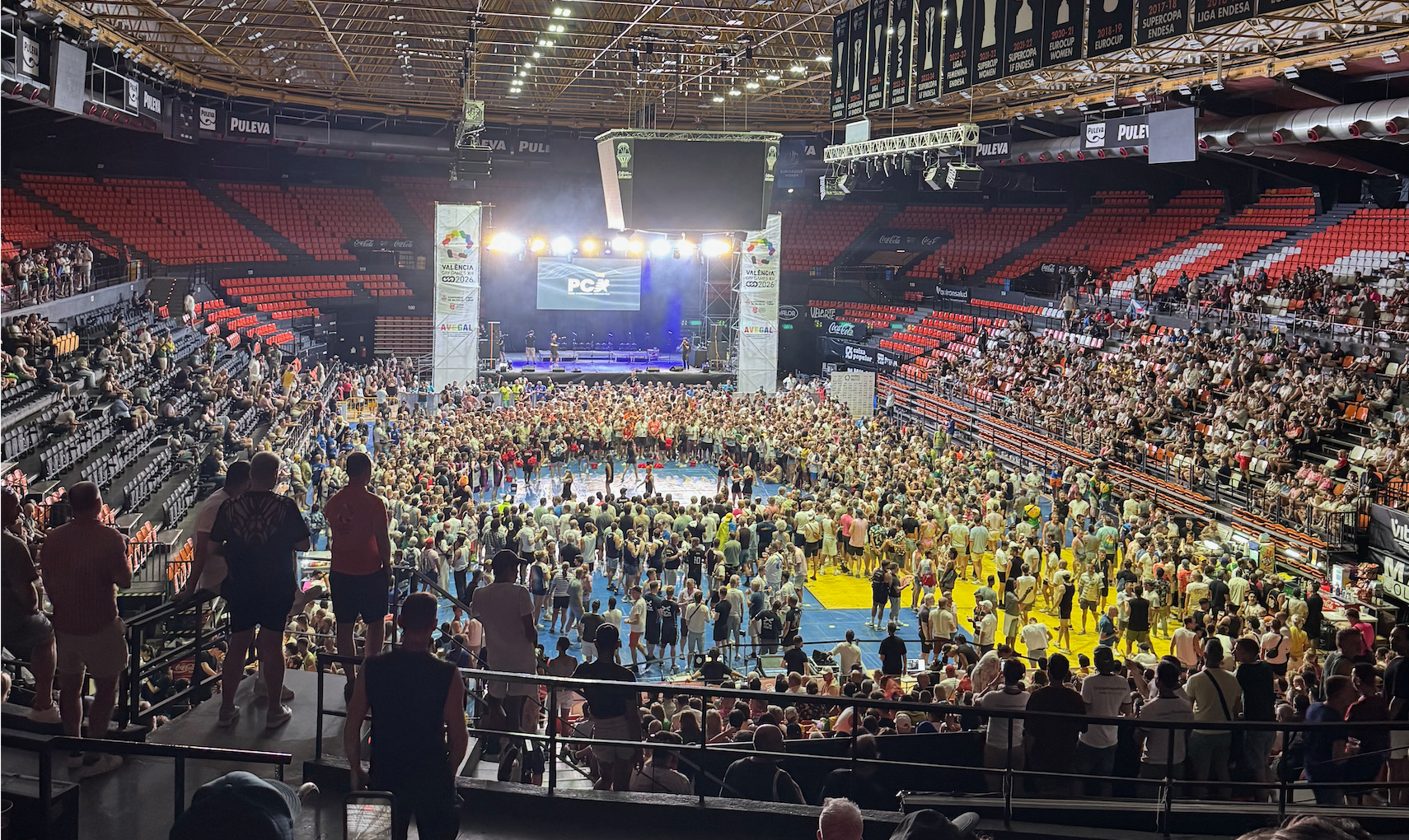
The signing was one of the most significant outcomes of Gay Games XII, held in Valencia from 27 June to 4 July 2026. The event brought together approximately 10,200 participants representing 81 nationalities, making it one of the largest editions of the past decade and the first Gay Games to be hosted in Spain and the Mediterranean region. Competitions across dozens of sports were accompanied by cultural performances, community activities and discussions on equality and human rights.
Since their creation in 1982, the Gay Games have sought to make participation more important than sporting status or competitive performance. Athletes do not need to meet qualifying standards and participation is open regardless of sexual orientation, gender identity or level of ability. The Valencia edition continued this tradition while placing questions of gender diversity and trans participation particularly prominently within its sporting and educational programme.
From self-identification to structural commitment
Gender inclusion was already a central element of the Federation of Gay Games’ approach before the opening ceremony. In March 2026, the Federation announced changes to registration procedures for wrestling and grappling after concerns were raised by trans and non-binary participants.
The revised procedures removed the requirement to provide legal gender documentation, clarified access to an all-gender category and reaffirmed gender self-identification as a core principle of the Gay Games. Under the Federation’s guidelines, women’s participation includes trans women, men’s participation includes trans men, and additional all-gender categories can provide opportunities for non-binary athletes where the structure of a sport makes them necessary.
The subsequent signature of the Charter for Gender Diversity in Sport therefore represents more than a symbolic declaration. It connects the Federation’s principles and recent operational decisions with a broader framework through which sports organisations can assess and progressively improve their policies, facilities and everyday practices.
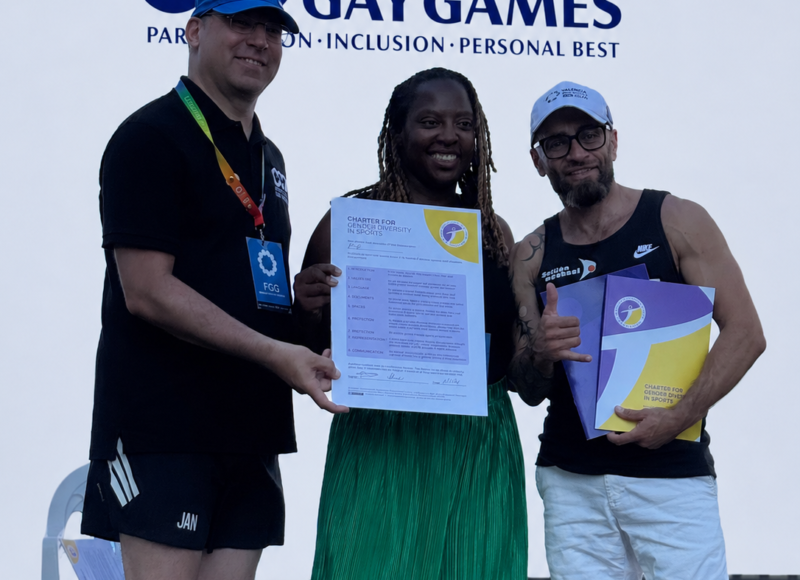
The document was signed on behalf of the Federation of Gay Games by its Co-Presidents, Jan Schneider and Sophi
a Goodner-Rodriguez, during the Valencia Games. The Federation presented the decision as a commitment to trans, non-binary and intersex inclusion, as well as a message to other organisers of international and multi-sport events.
What the Charter asks sports organisations to change
The Charter was developed by Seitenwechsel e.V., the Berlin-based sports association for women, lesbians, trans, intersex and non-binary people. Rather than functioning as a general statement of support, it identifies concrete areas in which sporting organisations can recognise and remove structural barriers.
Its nine areas of action include the recognition of gender diversity, respectful and inclusive language, visibility and representation, registration documents, access to changing rooms and other spaces, protection from discrimination and violence, organisational innovation, intersectionality and external communication.
Signing the Charter does not imply that an organisation has already resolved every issue. Seitenwechsel defines it as the beginning of an ongoing process in which governing bodies, staff members, coaches and participants assume responsibility for making their organisation more accessible to people of all genders.
This approach is particularly important because exclusion is not produced only through formal eligibility regulations. It can also emerge through binary registration systems, inappropriate questions, the absence of safe changing facilities, the misuse of personal information, discriminatory language or a lack of procedures for responding to harassment.
The Charter had previously been signed by organisations including the European Gay and Lesbian Sport Federation, which licenses the EuroGames, and Gaynet in Italy. The Federation of Gay Games’ signature extends the framework’s international reach and connects European grassroots work with the global LGBTQIA+ sports movement.
“Trans football is football”
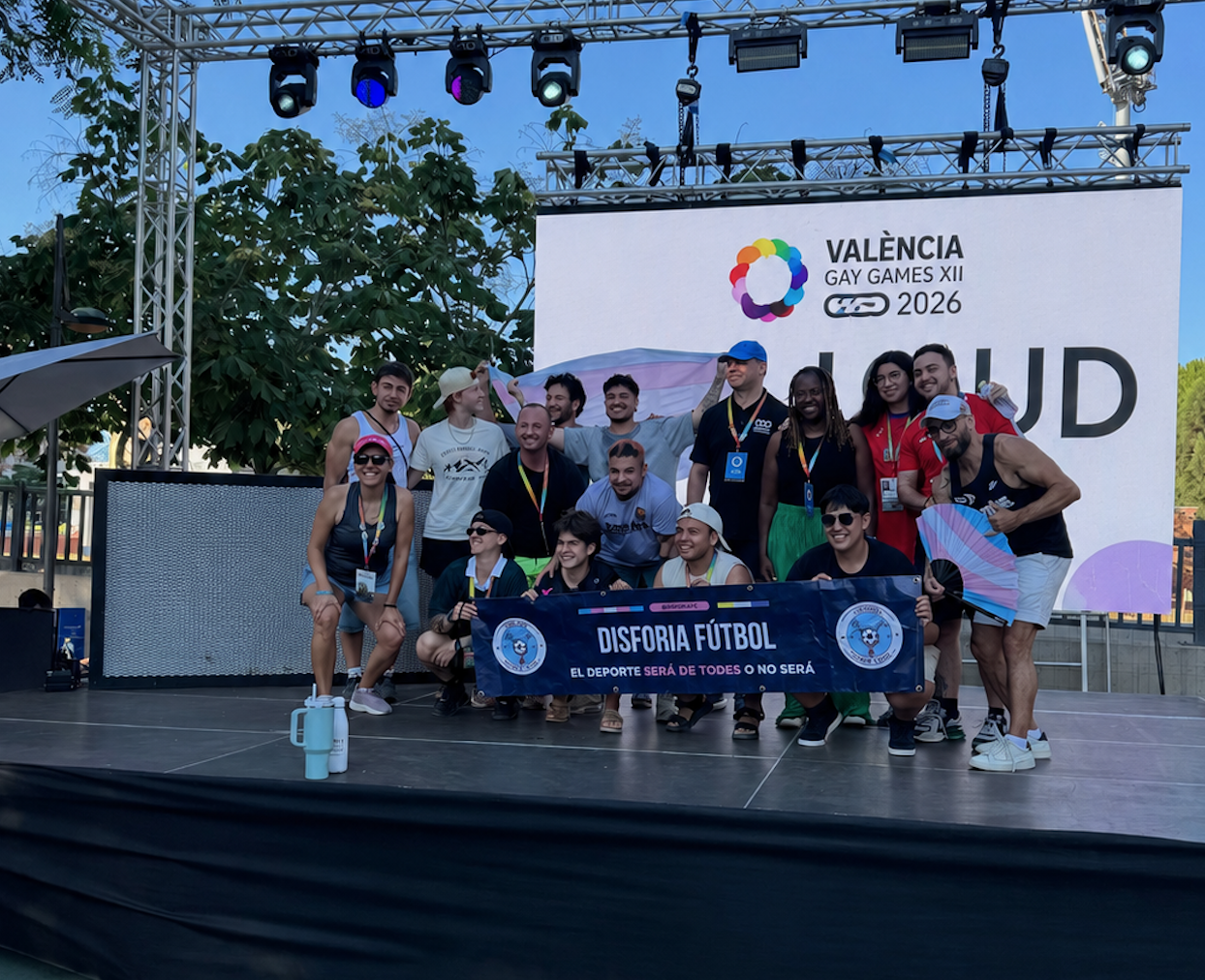
Trans participation was also explored through the Gay Games’ Out Loud programme, a series of public discussions addressing inclusion, accessibility and LGBTQIA+ experiences in sport.
The session “Fútbol Trans es Fútbol”, held on 2 July and moderated by Martin Muñoz of Seitenwechsel, focused on the experiences of trans players and the development of football communities in which trans people can participate safely. The panel featured representatives of Disforia FC from Chile and Didetrans FC from Mexico, bringing together two examples of trans-led football organising in Latin America.
Founded in 2019, Disforia describes itself as Chile’s first sports club created for trans and non-binary people. Although football remains a central part of its identity, the organisation has also developed basketball and volleyball activities. Its work combines sporting participation with community building, mutual support and the creation of spaces in which players do not have to continually explain or defend their identities.
The participation of Disforia and Didetrans in Valencia demonstrated why trans-led sporting initiatives matter. Such clubs offer immediate opportunities to play, particularly for people who have experienced rejection or discomfort in mainstream teams. At the same time, they generate knowledge that can help traditional clubs and federations transform their own structures.
Creating dedicated trans sporting spaces should therefore not be seen as a substitute for inclusion in mainstream sport. Both approaches are necessary: autonomous community spaces can provide safety, empowerment and visibility, while federations and conventional clubs remain responsible for removing barriers within their own competitions and organisations.
Germany’s playing-rights model for TIN* people
The discussion also examined Germany’s playing-rights framework for trans, intersex and non-binary people in organised grassroots football. Since the 2022–2023 season, players registered as “diverse” or with no gender specified, as well as trans people undergoing transition, may choose whether to play in a women’s or men’s team. The rules apply to competitions administered by Germany’s regional and state football associations, including adult amateur football, youth football and futsal, but not to the national professional leagues.
Trans players may remain with their existing team during transition or change category at a self-determined time, without the usual waiting periods or transfer deadlines. Non-binary, intersex and agender players without a male or female legal gender marker may choose either category without a fixed time limit.
Each regional or state association appoints a trained, confidential contact person who coordinates directly with
registration and competition departments and supports the player until the relevant playing right is issued. In Berlin, this role operates within the BFV’s wider diversity structure and serves as an advisory member of its Social Responsibility Committee. It is therefore not a commission assessing whether individual players are eligible: the model is based on self-determination, supported by a confidential administrative procedure.
In 2026, the Berlin Football Association reported 744 players registered with the legal gender marker “diverse” and 15 with no gender specified, reflecting the increasingly visible presence of TIN* people in community football.
Grassroots inclusion and elite restrictions
The discussions in Valencia took place at a moment when the direction of international elite sport is becoming increasingly restrictive.
In March 2026, the International Olympic Committee announced a new policy officially framed as protecting the women’s category, due to apply from the Los Angeles 2028 Olympic Games onwards. It restricts eligibility for women’s events at IOC competitions to athletes classified as biologically female through a one-off SRY gene screening. In practice, the policy excludes trans women—and some athletes with sex variations—from Olympic women’s events, while requiring every athlete seeking to compete in the category to undergo sex verification.
Elite sport, grassroots sport and open multi-sport events do not necessarily have the same objectives or regulatory needs. Nevertheless, the contrast is significant. While several elite governing bodies are adopting more restrictive eligibility rules, initiatives such as the Gay Games, the Seitenwechsel Charter and the German amateur football regulations seek to safeguard participation through self-identification, flexible playing rights and practical organisational support.
The challenge is therefore not to impose a single model indiscriminately on every level of sport, but to ensure that regulatory debates do not erase the right of trans, intersex and non-binary people to be physically active, join a club, build relationships and experience the social benefits of sport. This was the approach underpinning the IOC Framework adopted in 2021, which placed inclusion, non-discrimination, evidence-based decision-making, health and bodily autonomy, and the right to privacy at the centre of eligibility policy.
From principles to implementation
For the Outsport Office, the signing of the Charter by the Federation of Gay Games is relevant precisely because it connects values with organisational responsibility.
International declarations are important, but inclusive sport is ultimately created through registration forms, qualified contact persons, trained coaches, appropriate facilities, safeguarding procedures and clear responses to discrimination. The experiences presented in Valencia demonstrate that workable solutions already exist and can be adapted to different sporting contexts.
The Charter, the work of trans-led clubs such as Disforia and Didetrans, and the German grassroots football model represent different but complementary approaches. Together, they show that inclusion is not an abstract aspiration: it is a continuous process of identifying barriers, sharing responsibility and creating the conditions in which people of every gender can participate, belong and develop through sport.
By Rosario Coco